
Strengthening Public Health Law in the FCT
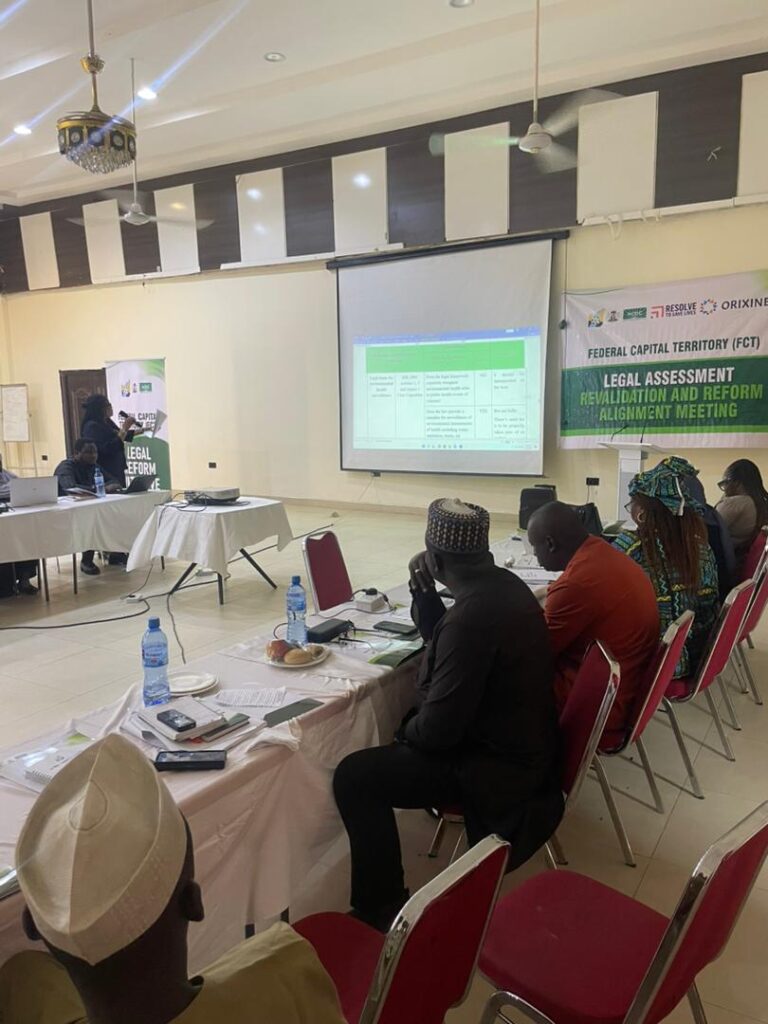
The Nigeria Centre for Disease Control (NCDC), in collaboration with Resolve to Save Lives (RTSL) and Orixine Consulting, partnered with the Federal Capital Territory Administration (FCTA) to revalidate and strengthen the FCT’s public health legal framework, building on the 2021 Public Health Legal Assessment.
The two day stakeholder engagement focused on building consensus around priority legal reforms and identifying practical pathways to modernise public health laws and institutions in the FCT.
The meeting convened key stakeholders from the FCT health, legal, environmental, and agricultural sectors, alongside national and international partners.
In the opening remarks delivered on behalf of the Mandate Secretary, the Director of Public Health, Dr. Dan Gadzama, underscored the need for legal reforms that respond to current institutional gaps and evolving public health threats highlighting “legal reforms is not an academic exercise…”.
Technical presentations provided context for the discussions, including an overview of Nigeria’s health security legal reform process and subnational alignment with the International Health Regulations (IHR), as well as a review of findings from the 2021 FCT Public Health Legal Assessment.
The assessment examined 18 laws across critical areas such as disease surveillance, laboratory systems, emergency preparedness and response, points of entry, immunisation, human rights, and data protection highlighting key legal and institutional gaps requiring reform.
Participants worked in thematic groups to validate findings, identify additional priorities, and propose targeted legal and institutional reforms to strengthen public health preparedness and response in the FCT.
The engagement concluded with agreement on next steps to consolidate recommendations and advance reforms through appropriate legal and policy channels.
In closing, the FCT State Epidemiologist, Dr. Ademola Lukman, commended participants and emphasised the importance of sustained collaboration to translate the outcomes into concrete legal and policy action.