
ORIXINE JOINS STAKEHOLDERS TO REVIEW HUMAN RIGHTS DEFENDERS PROTECTION BILL AND NHRC REFORM AT HOUSE OF REPS PUBLIC HEARING
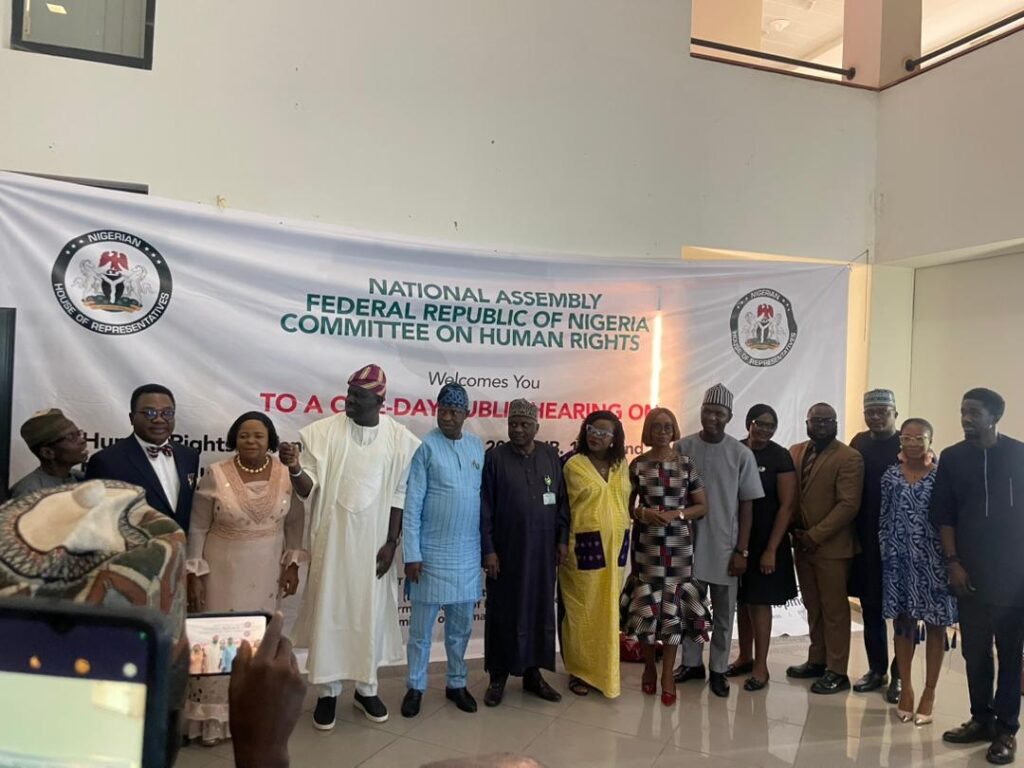
In the quest to strengthen and modernize Nigeria’s human rights framework, the House of Representatives convened a public hearing on two critical pieces of legislation: the National Human Rights Commission Act (Repeal and Re-enactment) Bill, 2025 (HB.2376) and the Human Rights Defenders Protection Bill, 2024 (HB.1867).
Held on 4 March 2026, the hearing was organized by the House of Representatives Committee on Human Rights in collaboration with the Policy and Legal Advocacy Centre (PLAC) and the UK Foreign, Commonwealth & Development Office (FCDO). The engagement convened high-level stakeholders, including representatives of the National Human Rights Commission (NHRC), the Executive Secretary and Chief Executive Officer of the Commission, Clement Nwankwo; Matthew Ayibakuro, Executive Director of PLAC; members of the Nigerian Bar Association; the Office of the Secretary to the Government of the Federation; the Ministry of Justice; and various civil society organisations.
In his opening remarks, the Chairman of the Committee emphasized that all memoranda submitted would undergo critical review and be transmitted to the Senate. He noted that the objective of the hearing was to address institutional gaps, examine the constitutional and legal implications of the proposed bills, and align the legislation with national best practices.
Stakeholders highlighted several key issues requiring attention, including the need for clearer enforcement mechanisms to safeguard institutional independence; stronger protections for human rights defenders against maltreatment by law enforcement officers; clearer articulation of provisions relating to the proposed 0.3% annual tax contribution, workers’ rights, and ease of doing business; fuller integration of relevant constitutional provisions; youth representation within the framework; rural accessibility and awareness; and the establishment of a monitoring mechanism to ensure effective post-enactment implementation. The importance of digital mechanisms to enhance the protection of human rights defenders was also underscored.
Barr. Ruben, representing the Attorney General of the federationfrom the Ministry of Justice expressed reservations, noting that certain aspects of the bill reflect existing constitutional provisions and recommending redrafting for clarity, while affirming the Ministry’s overall support for the legislative effort.
Approximately 90% of participants expressed support for the passage of the bills and encouraged the Committee to incorporate the recommendations presented. Stakeholders further recommended that the legislation be passed before August 2026 in view of preparations for the 2027 general elections.
Orixine is proud to have participated in this significant legislative engagement and remains committed to advancing human rights protection, institutional accountability, and inclusive governance in Nigeria.