
Orixine Consulting Participates in High-Level National Forum on Eliminating Violence Against Women and Girls in Nigeria
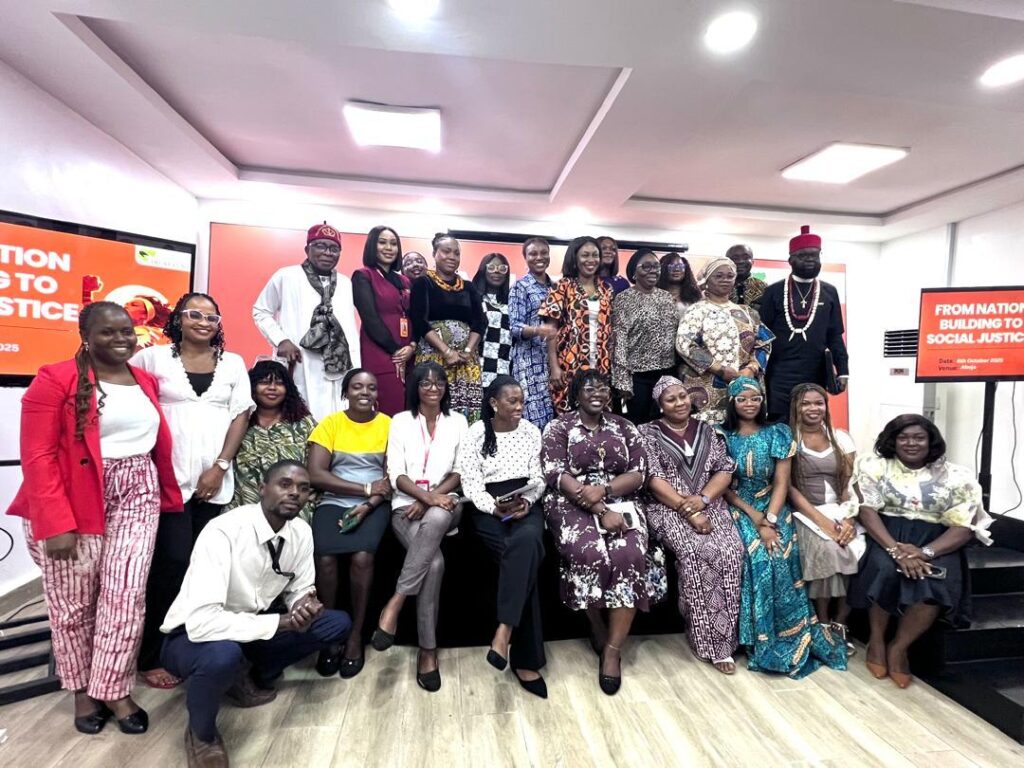
On October 6, 2025, Orixine Consulting participated in the Nigeria Trust Fund Women’s Forum (NTFWF), a national multi-stakeholder convening dedicated to advancing dialogue and coordinated action towards ending violence against women and girls (VAWG) in Nigeria. The forum served as a strategic platform for strengthening policy coherence, institutional accountability, and intersectoral collaboration in addressing one of the country’s most pressing human rights and development challenges.
The event drew participation from key actors across the governance spectrum, including representatives of federal and state ministries, traditional institutions, civil society organizations, non-governmental organizations, gender equality advocates, and the media. The diversity of voices reflected a unified national resolve to confront the structural, cultural, and institutional drivers of gender-based violence (GBV) and promote the full realization of women’s rights within Nigeria’s socio-political and legal framework.
Representing the Minister of Women Affairs and Social Justice, Princess Hajiya commended the NTFWF for its sustained advocacy and contributions to national gender justice initiatives. She reaffirmed the Ministry’s commitment to deepening collaboration with civil society and development partners in implementing the national framework on GBV prevention and survivor support. She further noted that the Forum’s mission aligns closely with President Bola Ahmed Tinubu’s Renewed Hope Agenda, particularly its emphasis on inclusive governance and the equitable participation of women in nation-building.
In her opening remarks, Brenda Anugwom, Chief Executive Officer of the Nigeria Women’s Trust Fund (NWTF), reiterated the urgency of sustained collective action, stating that “social justice is not a privilege but a right.” She emphasized the need to institutionalize gender-responsive governance mechanisms, strengthen knowledge exchange, and scale up interventions that guarantee women’s safety and empowerment. Her assertion that “when women are safe, nations transform” encapsulated the central message of the convening.
The plenary session featured prominent discussants, including Senator Abiodun Olujimi (former Senate Minority Leader), Hon. Nnenna Elendu Ukeje (former Member, House of Representatives), Mrs. Mary Ikoku of Emerge Women, Mrs. Edidiong Idang of the ASR Foundation, a representative of the Federal Ministry of Women Affairs, and His Royal Majesty Eze Stan C. Onyedebelu Okeosisi II, of Ofekata II Autonomous Community, Imo State. Discussions focused on strengthening institutional frameworks, enhancing survivor-centered justice, and ensuring coordinated national responses to gender-based violence across sectors and governance levels.
Key insights from the dialogue emphasized that social tolerance of violence perpetuates its normalization, institutions must be held accountable for justice delivery failures, and greater protection is required for vulnerable populations, including domestic workers and informal-sector women. Panelists unanimously agreed that violence against women is not solely a gender issue but a national social crisis that demands systemic reform and sustained public engagement.
Data presented during the forum revealed a disturbing trend — women aged 17 to 30 years accounted for the majority of recorded femicide cases between January 2024 and October 2025. In response, participants identified five strategic imperatives for national action: (1) comprehensive legal reforms, (2) targeted cultural transformation, (3) sustained advocacy, (4) broad-based sensitization, and (5) rigorous accountability and monitoring mechanisms.
The forum concluded with a shared commitment to operationalize these priorities through multi-sectoral partnerships, evidence-based policy reforms, and enhanced coordination among justice, security, and social service institutions. The engagement reaffirmed that eradicating violence against women requires more than legislative action—it demands a transformation of mindsets, governance systems, and societal values to guarantee that every woman in Nigeria lives free from fear, harm, and discrimination.