
Nigeria Confronts Fragmented Health Data System, Seeks Collaboration
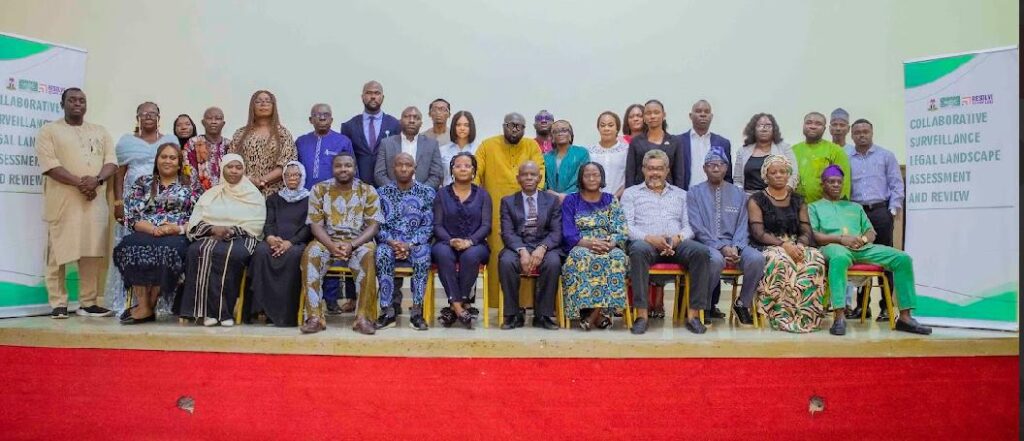
KEFFI, Nigeria — In Keffi, health officials, statisticians, environmental regulators and national security officers gathered for four days to confront a problem that rarely makes headlines but shapes every outbreak response: data.
The Nigeria Public Health Data Governance Legal Assessment Meeting, hosted by the Nigeria Centre for Disease Control and Prevention with support from Resolve to Save Lives, brought together more than a dozen agencies to examine why health information in Nigeria is scattered and hard to share. For years, outbreaks of cholera, Lassa fever and Covid-19 have exposed a patchwork system where ministries guard their own data, leaving crucial insights fragmented.
The ideals of the meeting were collaboration and trust. Around the table were the Federal Ministry of Health, the Federal Ministry of Agriculture, the National Bureau of Statistics, the Nigeria Data Protection Commission and the Office of the National Security Adviser. Their presence was a recognition that no single agency can manage surveillance alone. “Viruses don’t respect ministry boundaries,” one participant said.
Discussions centered on laws and mandates. The NCDC Act, participants noted, gives the Centre a surveillance role but no explicit power to compel or share data across government. The Statistics Act, unchanged since 2007, predates cybersecurity. The Nigeria Data Protection Act of 2023 protects privacy but may, in practice, restrict timely sharing during emergencies. Environmental laws are even older, silent on digital security.
Yet the week was not just about gaps. Participants floated solutions: amending the NCDC Act to give clear authority for inter-agency data sharing, updating the Statistics Act, creating a binding national protocol so data can move automatically during crises, and investing in interoperable digital platforms linking health, animal and environmental systems.
Perhaps most striking was the shift in tone. Agencies that once guarded their information acknowledged the need to work together. The National Bureau of Statistics offered to serve as a neutral hub, while security officials suggested integrating their intelligence systems with NCDC’s rather than duplicating them.
No law was passed in Keffi. But the meeting achieved something rarer: a shared commitment to act. As one official put it, “The gaps are clear, but for the first time, we are looking at them together.”
Orixine, is proud to have joined the process of enhancing fragmented health data system in Nigeria. Orixine’s active participation reflects our commitment towards a collaborative health system